
“Do you need a push?”
“Yes!” And four young people, total strangers, went to the front of our car. “Ok, now!” Scott put it in reverse.
It didn’t help. Now here came a blonde middle-aged woman with a bag of road salt on her shoulder. She’d gone and got it from the trucker who was also stuck in the rest area, just off the snowy highway in Field, BC. Decisions were made as to which side of which tires we should spread it. Another push from other people who had gathered around, still no movement.
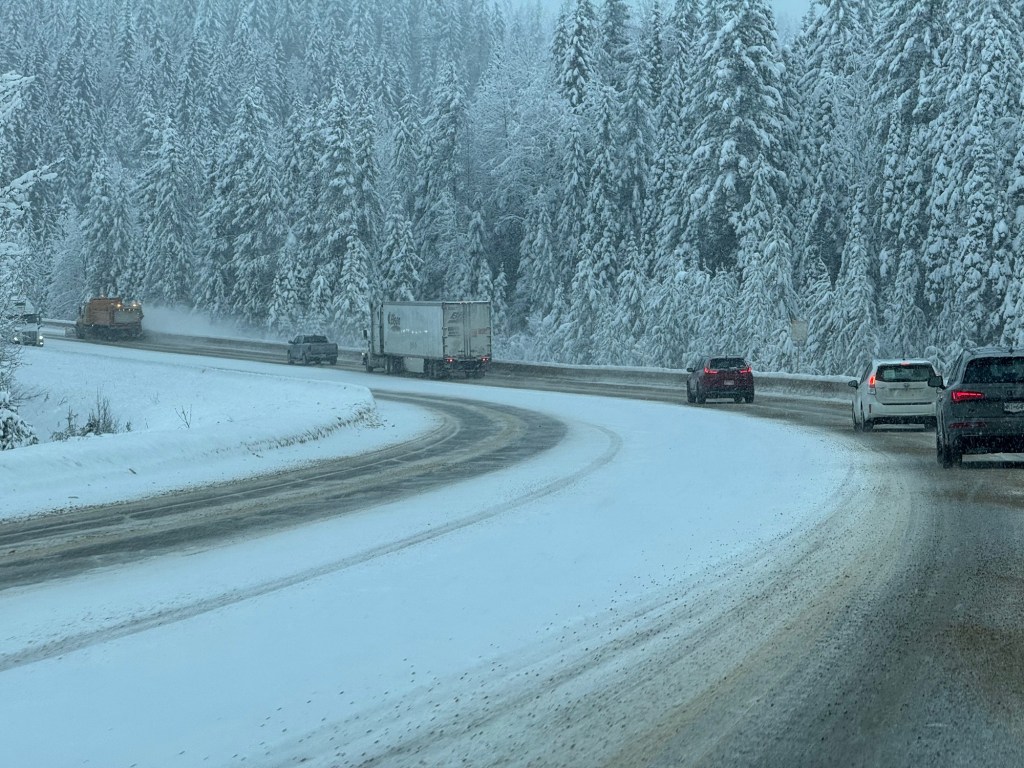
We hadn’t really thought too much of it when we planned to drive from Vancouver Island to Banff, Alberta, in December. I’d lived up north, and worked in the Yukon as a geologist before I became a teacher. Scott had been born in Alaska. We had winter tires on our compact SUV and chains in the back. Although we knew it might take some planning to take an EV on a two thousand kilometre trip, the weight of the batteries would help in winter weather.
Our first challenge wasn’t snow, but flooding in the Fraser Valley, coming out of Vancouver. Highway 1, the Trans-Canada, was closed near Chilliwack, but we could detour on # 7. That closed too, but not until after we were through.
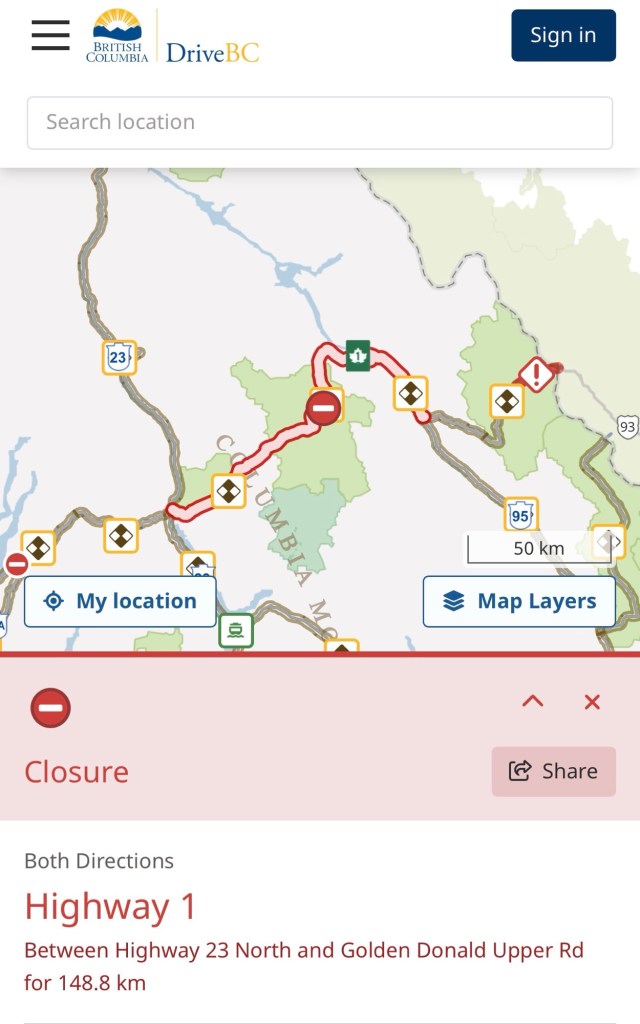
We hit our first snow on the summit of the Coquihalla Highway, but it was mostly clear by the time we reached Kamloops, for our first overnight stop. The next day it was landslides due to floods that detoured us again, but we made it to Revelstoke by lunch. The flashing bulletin over the highway as we turned into the town warned that the mountain pass we’d planned to traverse was closed.
When we saw on the Highways website that the next update on Roger’s Pass was in 15 hours, we booked a hotel and ordered a margarita with our lunch.
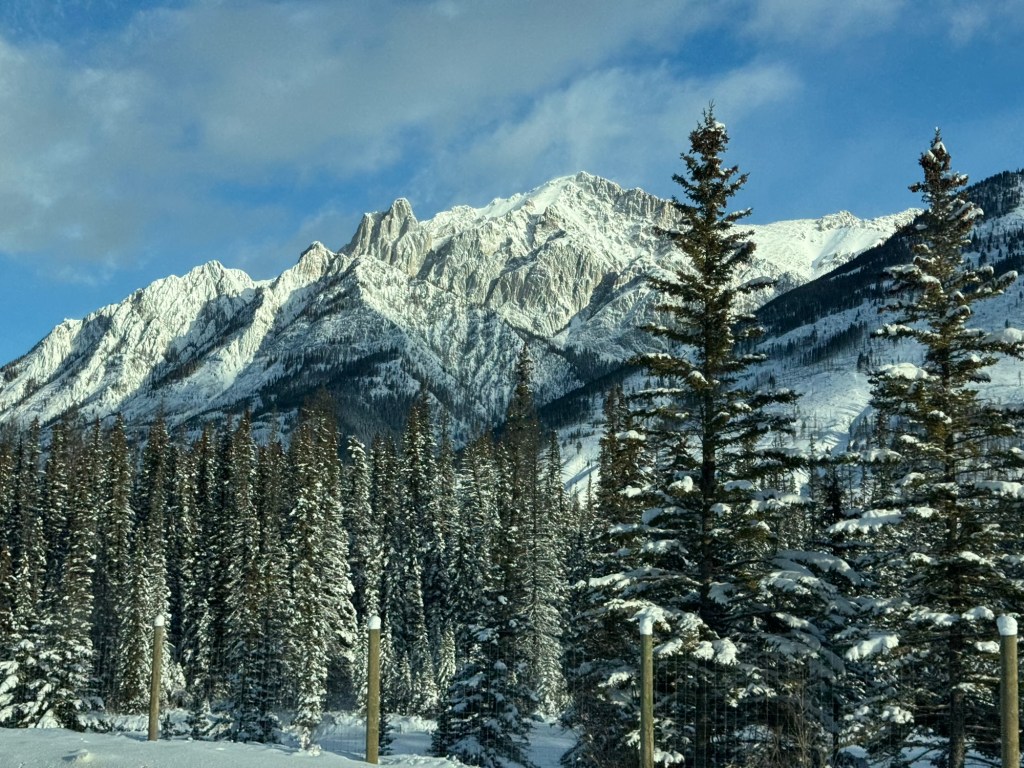
We arrived in Banff a day late, met our friends and had a wonderful week of skiing. When we headed home there was a snowstorm, but the roads we were travelling were all open. The EV charging station in Lake Louise was closed, so that left us no choice but to stop in Field, and get stuck in the snow!
Now here came a man in a one-ton pickup truck, big tires, high clearance, and the back full of industrial looking metal. After coming out and standing by our car, discussing the situation with us and various strangers, he hooked up a tow strap and pulled us backwards. Success!
As he rolled up the strap I grabbed a couple of cans of beer from our cooler and handed them to him, with thanks.
We were no longer stuck, but the story wasn’t over. We still needed to get to the EV charger. The rest area hadn’t been plowed, but the main areas had been flattened by vehicles. Not so the side lane with the chargers on it.
While Scott dug the never-used chains out from under our skis, a young woman with a Parks Canada jacket and a shovel came over, and she and I cleared some of the snow from around the charging station.
The lady with the salt came back as we were putting on the tire chains, two teenage girls in tow.
“She just got her license,” pointing to the older of the teens, “and I want her to see how to put them on.”
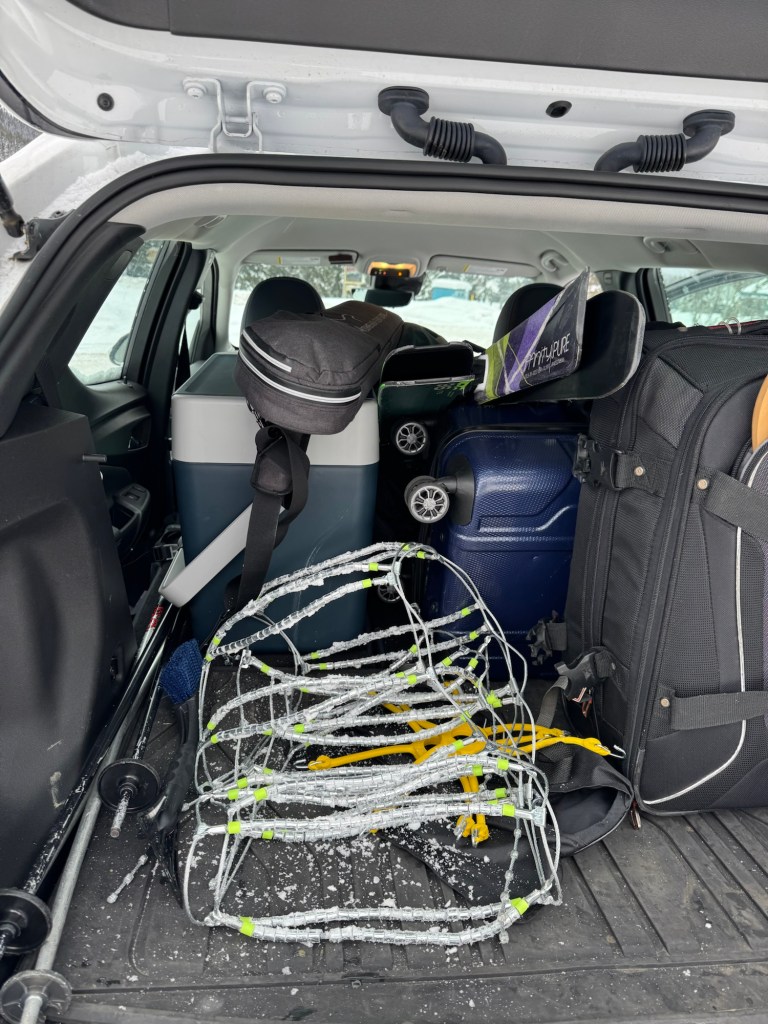
We might not have been the best teachers! I hadn’t put on chains for a decade or more, and we had to have the instructions laid out in the back hatch. After several tries and a few sharp comments to each other, we succeeded. An older couple, who had helped push earlier, waved as they drove by.
Eventually our EV was powered enough to make it to the next charging station in Golden, then back to Revelstoke on our way home. The rest of the trip was uneventful, although we did opt for the hour longer old route to avoid more snow on the Coquihalla. We’d had enough!
I think fondly of our roadside adventure. Probably a dozen people, complete strangers, pitched in and helped in the camaraderie of a winter storm. How Canadian is that?
We don’t have to be somewhere exotic to have brave travels!
 Brave Travels